Seattle residences in neighborhoods like Ballard, Queen Anne, and West Seattle encounter consistent arachnid movement driven by the maritime climate of King County . Elevated humidity, persistent autumn rain, and…
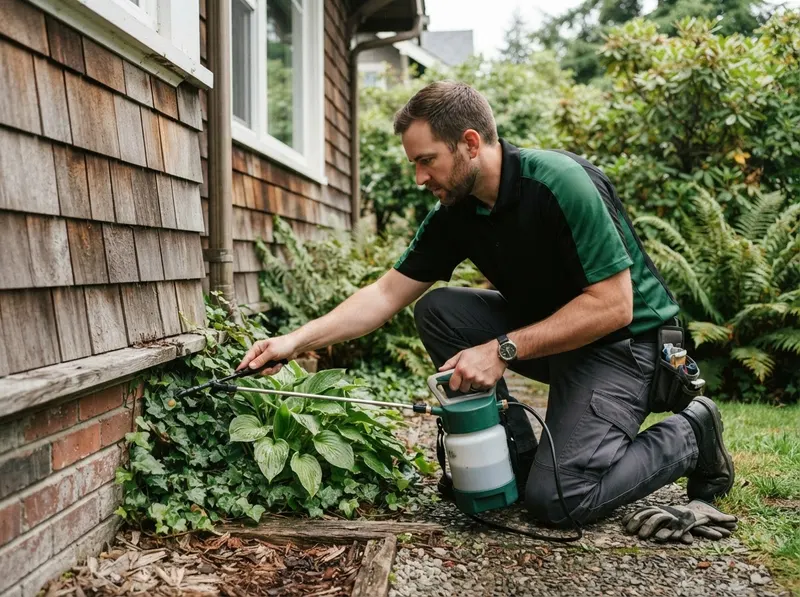
Seattle residences in neighborhoods like Ballard, Queen Anne, and West Seattle encounter consistent arachnid movement driven by the maritime climate of King County. Elevated humidity, persistent autumn rain, and mature urban tree canopies accelerate insect populations, which serve as the primary food source for native arachnids. Standard extermination practices often rely on broad-spectrum, persistent synthetic pyrethroids that disrupt urban pollinator habitats and flush runoff straight toward stormwater catch basins regulated under the Clean Water Act. Eco-conscious spider management abandons indiscriminate broadcast spraying. Instead, structural defense relies on the principles of integrated pest management codified by the Natural Resources Defense Council, targeting specific architectural harborage sites such as shiplap siding seams, foundation crawl vents, and cedar soffits.
The mechanical phase focuses on physical intervention. High-reach carbon poles clear egg sacs and web networks along roof overhangs, foundation stem walls, and entryways. Removing egg sacs directly reduces spring hatch volumes without applying chemical residues. Technicians install copper mesh and low-VOC silicone sealant around exterior utility penetrations, siding joints, and door jambs to eliminate arachnid access paths. The structural guidelines established by the EPA IPM standards indicate that sealing gaps wider than 1/8 inch blocks the majority of wandering indoor spiders, such as the giant house spider (Eratigena duellica), without requiring internal chemical fogging. For properties situated near dense vegetation such as Discovery Park in Magnolia or Green Lake Park, physical barriers provide permanent exclusion where liquid residuals wash out in wet weather.
Targeted natural applications complete the perimeter defense. Active exterior transition points receive botanical formulations containing thyme, rosemary, and wintergreen oils, which act as natural arachnid repellents by targeting their octopaminergic nervous receptors. These applications meet the minimum-risk pesticide standards outlined under FIFRA 25(b), ensuring treatment safety adjacent to home garden plots, residential HVAC air intakes, and domestic pets. Where structural foundation elements in Capitol Hill brownstones or historic Wallingford craftsman homes show localized moisture accumulation, treatments align with moisture remediation standards from the CDC Healthy Homes Program. Addressing the underlying moisture deters secondary moisture-seeking prey like silverfish and sowbugs, removing the prey base that attracts web-spinning spiders to interior crawl spaces and basements.
Every job gets a firm, written price after a free on-site visit.
For standards, safe disposal, and service guidance on PEST CONTROL SEVICE in Seattle, WA, useful references include U.S. EPA, ENERGY STAR, U.S. Dept. of Energy, Consumer.gov, U.S. Census Bureau, and Google Maps. General consumer and small-business resources are available from USA.gov, Better Business Bureau, FTC Consumer Advice, U.S. Small Business Administration, and Ready.gov.
Tell us about your eco-conscious spider management job in Seattle and we'll send a clear, written quote, usually the same day.
 Ironleaf Exterminating